At a glance
- Entry
- Free
- Time needed
- About an hour; half a day with the streets and hans around it
- Getting there
- T1 tram to Eminönü, a ferry to Eminönü, or Marmaray to Sirkeci
- Opening hours
- Daily, 08:00–19:30
- Best time
- Early morning; many shops open around 08:30
- Good to know
- Vacuum packs by weight, and many shops can ship home
A short history
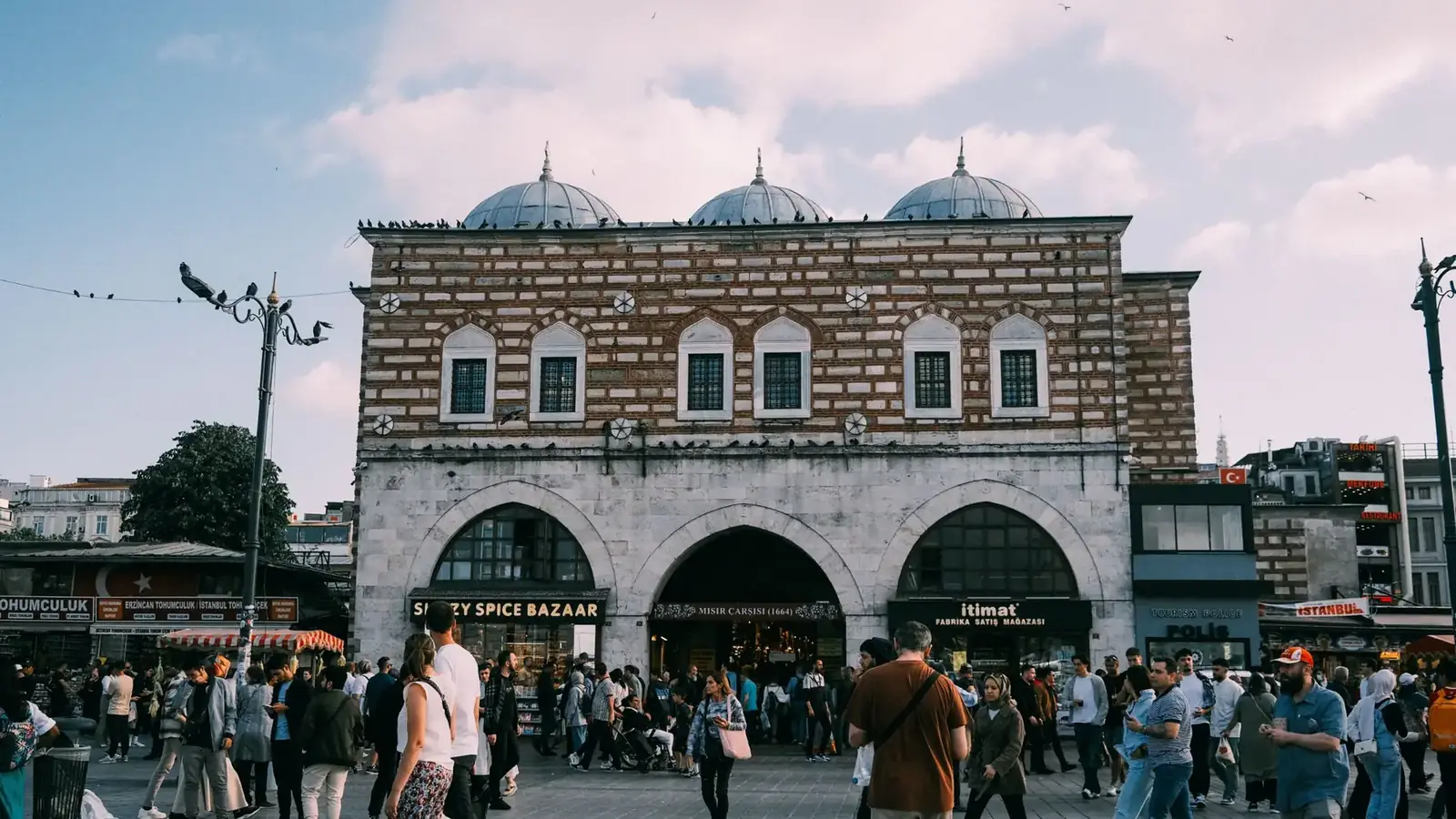
The Spice Bazaar, Mısır Çarşısı in Turkish, was built in the 1660s as part of the New Mosque complex on the Eminönü waterfront. Its Turkish name means the Egyptian Bazaar, a reminder of the trade that once linked the city with Ottoman Egypt. More than three centuries later, it is still a working market.
What to taste and try
There's no single thing you must buy, but these are the tastes we'd look for while you're there:
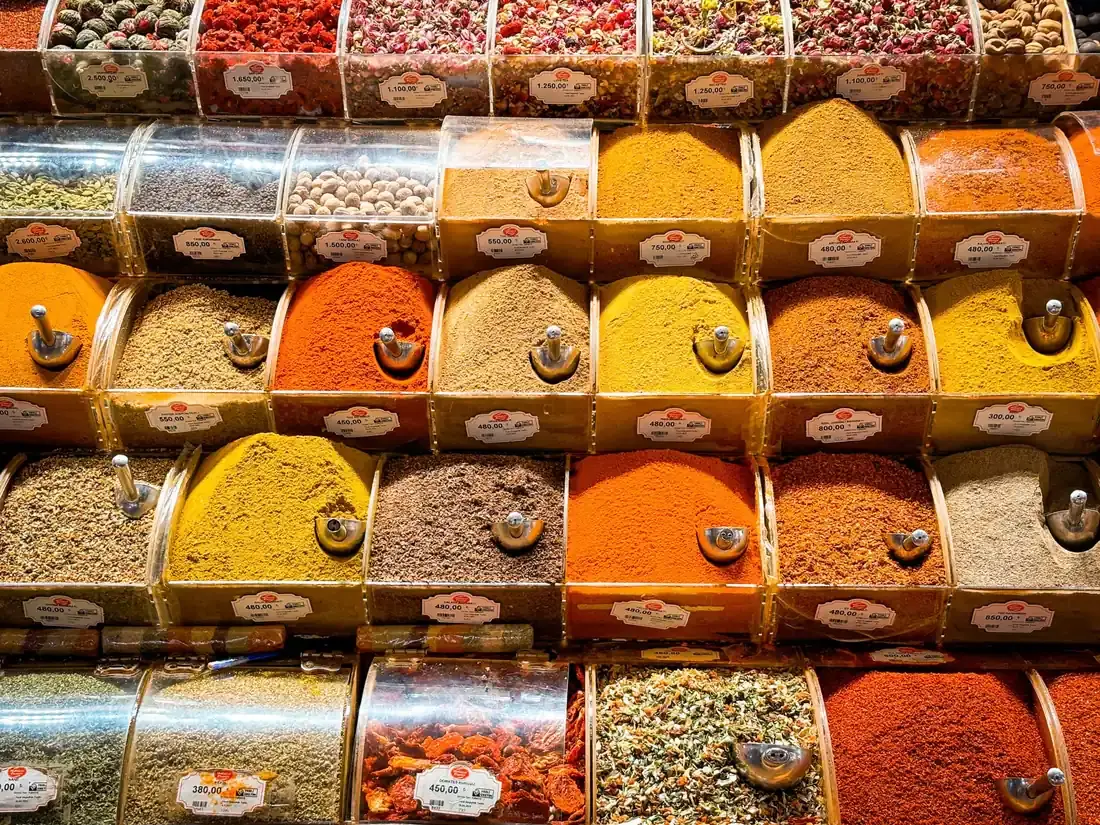
Spices: look beyond the colourful pyramids for blends that locals use, such as soup spice, fish spice and oily red pepper flakes.
Herbal teas: pomegranate and jasmine teas are two of our favourites.
Pistachio and walnut treats, from nut pastes to sweets.
Turkish delight in many flavours, best tasted fresh.
Turkish coffee, freshly ground.
How to shop without pressure
The bazaar is rarely quiet, but the first hours of the morning are the calmest, and many shops are open by around 08:30.
Check the price tag. Most products have a price written on them.
Buying several items? Ask for the total before you pay and try for a small discount, often by rounding the price down. Not every shop works this way, so ask politely.
Tasting offers are part of the scene, in the bazaar and on the streets around it. If something doesn't interest you, simply say thank you and move on.
If you're a real buyer, don't be shy: ask to taste whatever you're curious about.
Read the label on packaged food: check the ingredients, the expiry date and any allergen information.
Take health claims with a pinch of salt. Some blends and herbal teas are sold with promises of health benefits; enjoy them for their taste, and don't take those claims at face value.
Think about your luggage. Most products come in vacuum packs by the gram or kilo, so you can match your budget and suitcase space. Many shops can also ship home. If you're carrying food home, check your own country's customs rules first.
Around the bazaar
The streets behind the Spice Bazaar are still one of the city's busiest trading districts, and some of their best corners are easy to miss:
Rüstem Pasha Mosque: a small mosque by Sinan, famous for its tiles, reached by a stairway from the busy street below.
The old hans, just behind the bazaar: courtyards where trade has gone on for centuries, such as the Kurukahveci Han and, in the streets of Tahtakale, the Balkapanı Han, named after the honey that was once weighed and taxed here.
Büyük Valide Han, further uphill: on the way towards the Grand Bazaar rather than next to the Spice Bazaar. One of Istanbul's largest historic commercial hans, it was commissioned by Kösem Sultan in the 17th century.
Beta Yeni Han: a restored han near the bazaar and a good place to rest after shopping, perhaps with a Turkish coffee flavoured with a drop of mastic, or a menengiç coffee made from roasted terebinth berries.
Soup houses: small traditional places nearby serve a warming bowl of soup, a simple local lunch between shops.
These are working buildings and busy streets, so keep to courtyards and shops that are open to visitors.
Questions about the Spice Bazaar
Is the Spice Bazaar worth visiting?
Yes. Even if you buy nothing, the colours, scents and bustle make it one of the old city's most memorable stops.
Is there an entrance fee?
No. Entry is free.
Can I bargain at the Spice Bazaar?
Prices are usually marked. If you're buying several items, you can ask for the total and politely try for a small discount.
Can I take spices home?
Most shops vacuum-pack products, and many can ship. Check your own country's customs rules for food before you travel.
Spice Bazaar or Grand Bazaar?
The Spice Bazaar is smaller and focused on food; the Grand Bazaar is vast and sells almost everything. They're a short walk apart.
When is the Spice Bazaar closed?
It's open every day from 08:00 to 19:30. Hours can change on religious holidays, so check before you go around a Bayram.
Prices and opening hours may change. We verify practical details against official sources and show the date of our latest review at the top of each guide.